 Venus
Venus
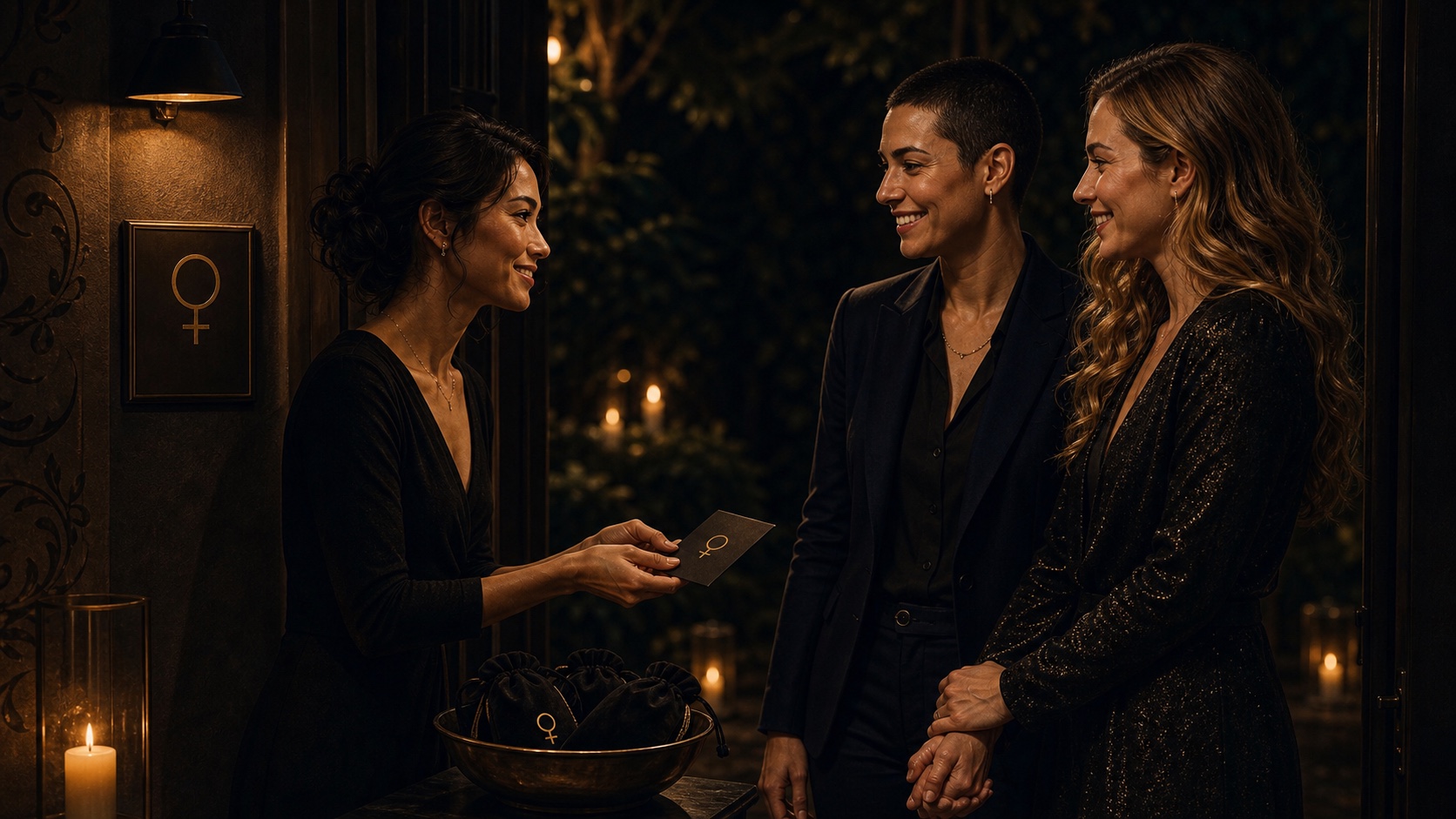
You can usually tell what kind of night this will be before anyone flirts with you.
It is in the front door. It is in whether someone looks up when you arrive. It is in whether your names are actually on the list, whether your coats have a place to go, whether the host clocks you as a couple instead of two random bodies walking in, and whether the room feels slowed down on purpose instead of waved through on vibes.
A lot of people think a good play party is defined by chemistry once the lights get low. That is too late. By the time the room gets hot, the host has already told you what standards run the night. A loose front door usually means a loose room. A calm, intentional front door usually means the opposite.
If you want to know whether a private party is responsibly managed, discreet, and worthy of trust, start with check-in. The best hosts use the first thirty seconds to lower chaos, protect couples, and make the room feel adult before it feels sexy.
The door shows how seriously the host treats the night
Anyone can write a sexy invite. Anyone can post a moody flyer. The harder part is creating a real threshold between the outside world and the room you are about to enter.
Good hosts do not treat the front door like a nightclub rope or a friend's messy apartment entrance. They treat it like the first trust ritual of the night. That means someone is actually receiving you. Not shouting from another room. Not sending a tipsy guest to handle arrivals. Not scanning your face for ten seconds and saying, yeah, you are good.
At a strong event, check-in feels clean and human. Someone confirms who you are. Someone tells you where to put your things. Someone gives you the privacy rules before you have to guess them. Someone makes it obvious that the room has a center of gravity.
That is why The Guest List Is the Party is not just a slogan. The guest list only matters if the door actually enforces it.
A good host welcomes the couple as a unit
This is one of the fastest tells in the space.
If a host greets the hotter partner first, forgets the quieter one, or starts talking as if one person is the real invite and the other is an accessory, that is not just bad manners. It is a warning.
Couples do better when the host reinforces their connection right away. That can be subtle. A quick look at both people. A welcome addressed to both names. A line like glad you two made it instead of laser-focusing on one body in the doorway. The point is simple: the host should make the pair feel seen together before the room starts pulling their attention apart.
That same instinct is part of why first-timers tend to do better at structured, well-run arrivals. Hotel Takeovers in Los Angeles: Why First-Time Couples Do Better Here works partly because the format gives couples a softer landing before the social heat starts climbing.
Verification should feel brief, adult, and slightly boring
That is a compliment.
Good verification is not sexy theater at the front door. It is not a fake velvet-rope performance. It is a short adult process that lets everyone relax because the basics were actually handled.
Maybe the host checks your names against the list. Maybe they confirm a photo, a plus-one, or a wristband color. Maybe they already screened you earlier and this is just the final handoff. Whatever the method is, it should feel calm and unsurprised. You are not being punished. The host is proving the room is protected.
What you do not want is improvisation. If the host suddenly says, wait, who are you with again? or lets someone argue their way inside because they know a guy, the mood drops fast. If a room will bend its standards at the threshold, it will usually bend them everywhere else too.
That is the real point behind Verified Is Not a Badge. It Is a Filter. Verification should reduce uncertainty without becoming a guarantee. At the door, you should feel that filter working.
The phone policy, coat flow, and first drink tell on the host
Hosts reveal themselves in logistics.
If there is nowhere clear to put coats, the room usually gets sloppy later. If the phone policy is vague, privacy usually is too. If arrivals are grabbing drinks before they know the house rules, pace control is already gone.
Good doors do small things that change the whole night:
- a visible place for phones if the event stores them
- a calm line about photo rules before anyone wanders deeper inside
- a coat drop that does not feel like a pile on a chair
- a pause before alcohol hits the hand of someone already buzzing
None of that is glamorous. It is just competent. But competent is sexy in this world because competence is what makes people stop scanning for danger.
If you have ever wondered why some rooms feel hot without feeling frantic, this is a big reason. Why Good Play Parties Have a Phone Policy matters because privacy is not a speech on a website. It is a behavior at the door.
The best check-in slows the room down on purpose
Many bad events make the same mistake. They confuse speed with ease.
People arrive, get waved in, get a drink shoved at them, and are basically told to self-organize. That may feel relaxed for ten minutes. Then the room starts splitting into fast chemistry, awkward circling, unclear boundaries, and that particular social static that shows up when nobody knows who is holding the container.
Good hosts slow the first beat down. Not forever. Just enough.
Maybe there is a lounge before the play space. Maybe the host or door person says, Take a minute, settle in, bar is to the left, private rooms stay closed until later. Maybe they intentionally keep the first arrivals in a social layer before the night tips toward anything more charged.
That kind of pacing helps everyone, but especially couples. It gives them time to land together, read the room, and warm up before attention starts scattering. It is the same logic behind using the first hour well, which is why The First Hour Rule Before Couples Split at a Party works so reliably when hosts support it instead of undermining it.
The front door is where a host should say no cleanly
A good host is not just someone who knows how to welcome. It is someone who knows how to refuse without poisoning the room.
If someone shows up too drunk, off-list, angry, chaotic, or trying to negotiate their way past a standard everyone else respected, the answer should be calm and final. Not mean, not embarrassed, not public theater. Just clear.
That can sound like:
We are not adding guests at the door tonight.We are keeping the list exactly as approved.Tonight is not the right fit, but thank you for understanding.We need everyone to arrive in a better state than this.
If a host cannot hold that line, the room pays for it later. Usually the couples pay first.
Guests should not have to decode the rules from the room itself
One reason first-time couples get rattled is that many rooms make them learn the standards by trial and error. That is backwards.
You should not have to guess whether phones stay out. You should not have to guess whether closed doors are private. You should not have to guess whether the host expects direct consent language or assumes everyone will just magically read body cues correctly. A good host sets enough tone at the threshold that the room feels easier to read once you are inside.
That does not require a lecture. In fact, lectures usually mean the room already lacks culture.
It requires a few sharp lines delivered at the right time:
No phones past this point.Ask before joining anything.Couples set their own pace here.If you need us, grab us early, not late.
Short is better. Calm is better. The goal is not moral education. The goal is giving adults a clean container to play inside.
What guests should notice in the first thirty seconds
If you are arriving as a guest, here is the quick test.
Notice whether the host seems sober, present, and in charge. Notice whether both of you are being welcomed. Notice whether there is any confusion about your invitation. Notice whether privacy rules are visible or verbalized. Notice whether the arrivals area feels composed or scattered. Notice whether the first drink is being offered as hospitality or as anesthesia.
If the front door feels loose, believe it. Do not tell yourself the real curation starts later.
The same goes for Los Angeles couples trying to choose between private events. Private Lifestyle Events in Los Angeles Are Only Fun If the Room Is Right starts before the room itself. It starts at the threshold.
The best hosts make risk controls feel unobtrusive, not clinical
This is the real art.
People do not want a TSA checkpoint before a sexy night. They also do not want chaos dressed up as freedom. The hosts guests trust most are the ones who can create standards without killing tone. Their check-in feels warm, discreet, and slightly invisible, even though a lot is quietly being controlled.
In a well-run room, that is the difference between a room that feels curated and a room that feels like it is hoping for the best. A great front door says: we thought about this before you arrived, we know who is inside, and you do not need to get vigilant to have a good night.
That is what guests are actually paying attention to, even when they cannot name it out loud.
The short version
If you want the cheat sheet, here it is:
- Good doors welcome the couple, not just the loudest person.
- Verification should feel brief, calm, and non-negotiable.
- Phone policy, coat flow, and first-drink pace are trust signals.
- Strong hosts slow the first beat down before the room speeds up.
- If the front door feels loose, the night usually will too.
People love to say the vibe tells all. Sometimes it does. But the front door usually tells sooner.
The best rooms do more than feel exclusive. They make desire, privacy, friendship, and dignity easier to hold at the same time.