 Venus
Venus
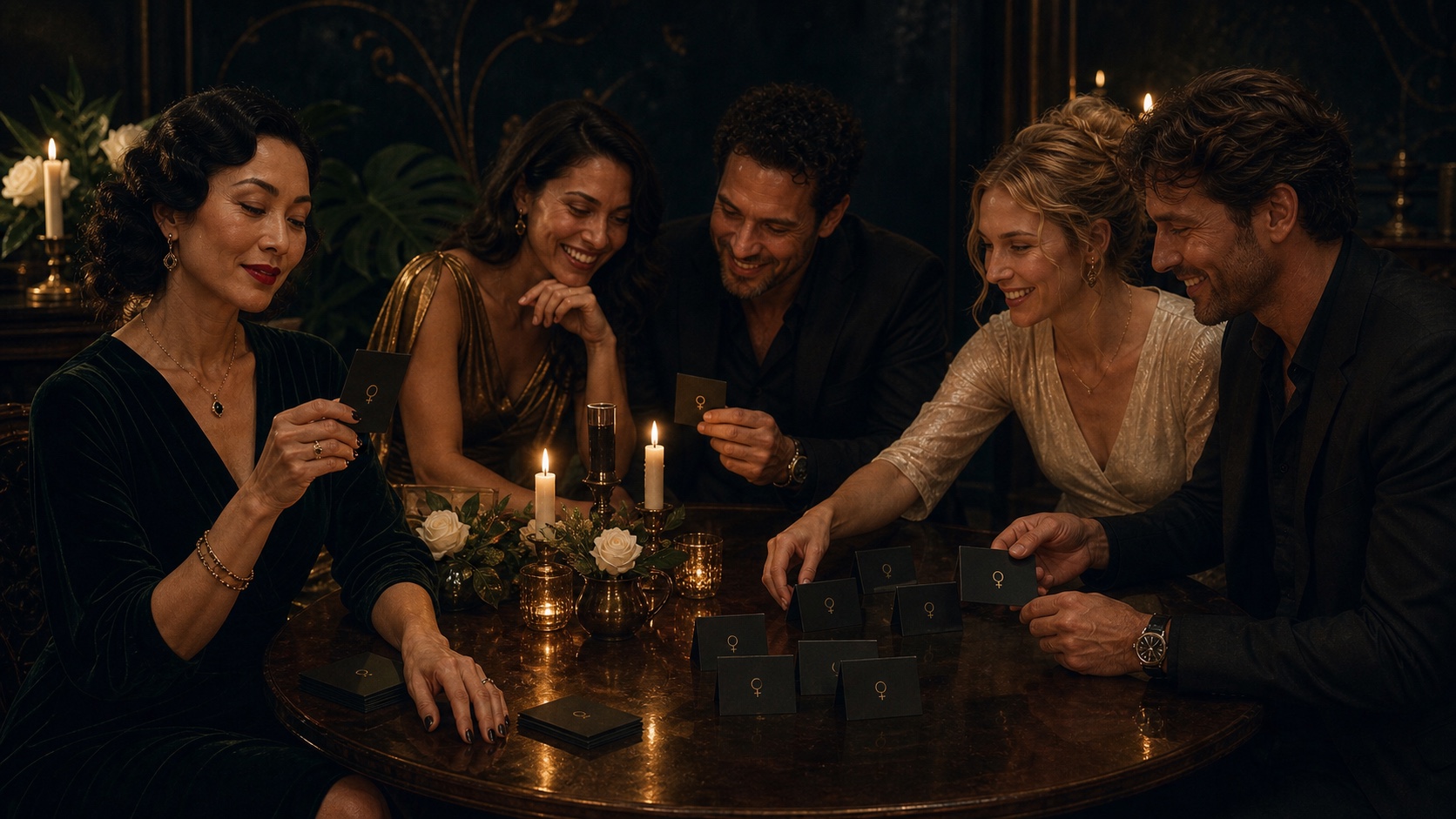
A private play party does not become curated because the lighting is low and the drinks are cold. It becomes curated because the wrong people never made it onto the guest list.
People love to talk about decor, chemistry, and venue choice because those details are easy to photograph. The real work happens earlier. It happens in the application, the texts, the follow-up questions, the tiny moments where a host decides whether a couple feels grounded, curious, and easy to trust, or whether they are about to turn the room into extra labor for everybody else.
If you have ever walked into a room that felt sexy on paper but strangely tight in person, this is usually why. The music was fine. The champagne was fine. The people were technically attractive. But the guest list was lazy. Somebody let in too many people who wanted attention more than connection, too many couples who were not actually on the same page, or too many guests who hear a boundary and immediately look for the loophole.
That is why the best hosts are not just throwing a party. They are casting a social environment. If you already know how to tell curated from chaotic before you RSVP, this is the next layer down. A strong room is usually built long before the first heel hits the floor.
Attractive is not the same thing as responsible enough to include
A weak host screens for surface heat. A strong host screens for room impact.
Those are not the same thing. Somebody can be gorgeous, stylish, flirtatious, and still destabilize the night in twenty minutes. Maybe they drink too fast. Maybe they need to be the loudest person in every cluster. Maybe one half of the couple is clearly driving the application while the other is trailing behind with dead eyes and agreeable little one-word answers. Maybe they treat every boundary like customer service instead of house rules.
The guests everybody wants back are usually calmer than people expect. They are warm without performing. They answer questions cleanly. They do not sound panicked about access. They know how to flirt without pushing the room off balance. They make everyone else feel like the night is in good hands.
That is the actual luxury. Not just beauty. Predictability, composure, and people who know how to carry desire without spraying it all over the room.
Good hosts listen for whether the couple sounds like one decision or two
One of the clearest guest-list tells is whether both people in a couple sound like they are arriving at the same party.
That does not mean they have the same personality. It means the energy matches. The answers match. The pace matches. If the host asks what kind of room they like, one partner should not sound thoughtful while the other sounds confused about why they were even asked. If the host asks about privacy, phones, or what makes a night feel good, both people should sound like they have actually talked.
This is the same logic behind The Couch Test. Before chemistry matters, coherence matters. Hosts who ignore that because the photos are strong usually end up babysitting somebody else's couple dynamic by midnight.
Clean alignment sounds simple in real life:
- "We usually like to settle in together first, then branch out if the room feels right."
- "We are social, but we do better in rooms where privacy rules are actually enforced."
- "If one of us cools off, we check in privately and reset before anything gets weird."
Muddy alignment sounds like trouble:
- "She is more into this than I am, but we are down."
- "He handles most of this stuff, I just go with it."
- "We do not really do rules, we just read the vibe."
A good host hears the second group and understands that the night will not get easier once the clothes get nicer and the lighting gets lower.
The way someone handles small rules predicts how they will handle bigger ones
Hosts do not need mind-reading powers. They need pattern recognition.
People tell on themselves early. They tell on themselves when they push for the address too soon. When they ask if the phone policy is really that strict. When they want to swap in an extra guest after the list is already locked. When they go vague the moment a host asks a direct question. When they keep angling for exceptions because they think being charming should count as compliance.
In a well-run room, trust works best when it is structural, not emotional. A host should not need to hope someone will behave once they are inside. They should have enough evidence that the guest already respects the shape of the night. That is also why details like a real phone policy matter so much. People who are irritated by the guardrails before arrival are rarely more elegant after a second drink.
The strongest hosts do not treat rule-pushing as a minor annoyance. They treat it as a preview.
Good screening is about social pace, not interrogation
There is a wrong way to do this. A host who comes off paranoid, theatrical, or hungry for private details creates a different kind of bad room.
Strong screening feels calm. The questions are there to understand fit, not to humiliate anyone. Good hosts want to know how a couple enters a room, whether they are comfortable with privacy rules, whether they know how to pause if one person wobbles, and whether they can answer without spinning a fantasy novel.
A few useful questions do more than a giant form ever will:
- "What kind of room do you usually like, slower and social or faster and more direct?"
- "Do you two usually stay together early, or are you comfortable splitting after you settle in?"
- "What makes a night feel well-run to you?"
- "How do you like a host to handle privacy and phone rules?"
You learn a lot from the content of the answer, but you learn just as much from the tone. Clean, grounded couples answer like adults. Messier guests answer like they are trying to get past security.
The room remembers who makes other people feel easier
This is the part newer hosts miss. A guest list is not just a list of hot people. It is a list of nervous systems.
Some people make a room easier the minute they arrive. They greet without taking over. They know how to read whether another couple wants a longer conversation or a quick hello. They can flirt without acting entitled to momentum. They leave space around other people. They make consent feel normal because their whole presence says, "nothing here has to be forced."
Other people create drag. They chase, hover, interrupt, overshare, posture, or crowd the room with low-grade urgency. Nobody may be able to point to one dramatic offense, but the whole night gets thinner around them.
That is why good hosts care so much about referrals, prior room behavior, and who has actually felt good in a curated setting before. The guest list is not a beauty contest. It is an atmosphere decision.
Guests should screen the host right back
This is not only a host lesson. Couples should reverse-screen the invitation too.
If you want to know whether the list is tight, ask the host a few simple things:
- How do you handle phones once guests arrive?
- How many new couples are you mixing in tonight?
- Do you keep the room more social early, or does it go fast?
- What do you do when somebody starts pushing the wrong energy?
You are not looking for buzzwords. You are looking for fluency. A strong host answers fast, clearly, and without sounding defensive. The best ones have already thought through the flow, the privacy logic, and the failure mode. That same competence usually shows up elsewhere too, including in quiet details like the powder room setup, the check-in tone, and how the room transitions from arrivals into actual play.
Red flags that the guest list is doing fake curation
- Everybody seems chosen for looks, but nobody seems chosen for steadiness.
- The host keeps making exceptions because they are afraid to disappoint people.
- One half of a couple answers everything while the other disappears.
- Privacy questions annoy the host instead of reassuring them.
- The room is too large for the amount of real trust the host has actually built.
- Guests keep arriving who clearly do not understand the tone of the night.
None of these details is subtle once you know what you are watching. The problem is that most people wait until they are already dressed, parked, and emotionally invested to start watching.
The best guest lists feel almost boring on paper, then great in real life
That is the paradox. Strong curation can look less exciting from the outside because it is built on judgment, not impulse. Fewer chaos agents. Fewer exception cases. Fewer couples who are still trying to figure out whether they even want the same night.
But once the doors close, that discipline pays off. People relax faster. Flirting lands cleaner. Boundaries sound normal. Privacy feels real. The room can get hotter because the foundation is less brittle.
A good party host knows the venue matters, the music matters, the towels matter, and the lighting matters. But if the guest list is lazy, the rest of the work is just expensive makeup on the wrong face.
The guest list is the party. Everything else is production design.
The best rooms do more than feel exclusive. They make desire, privacy, friendship, and dignity easier to hold at the same time.