 Venus
Venus
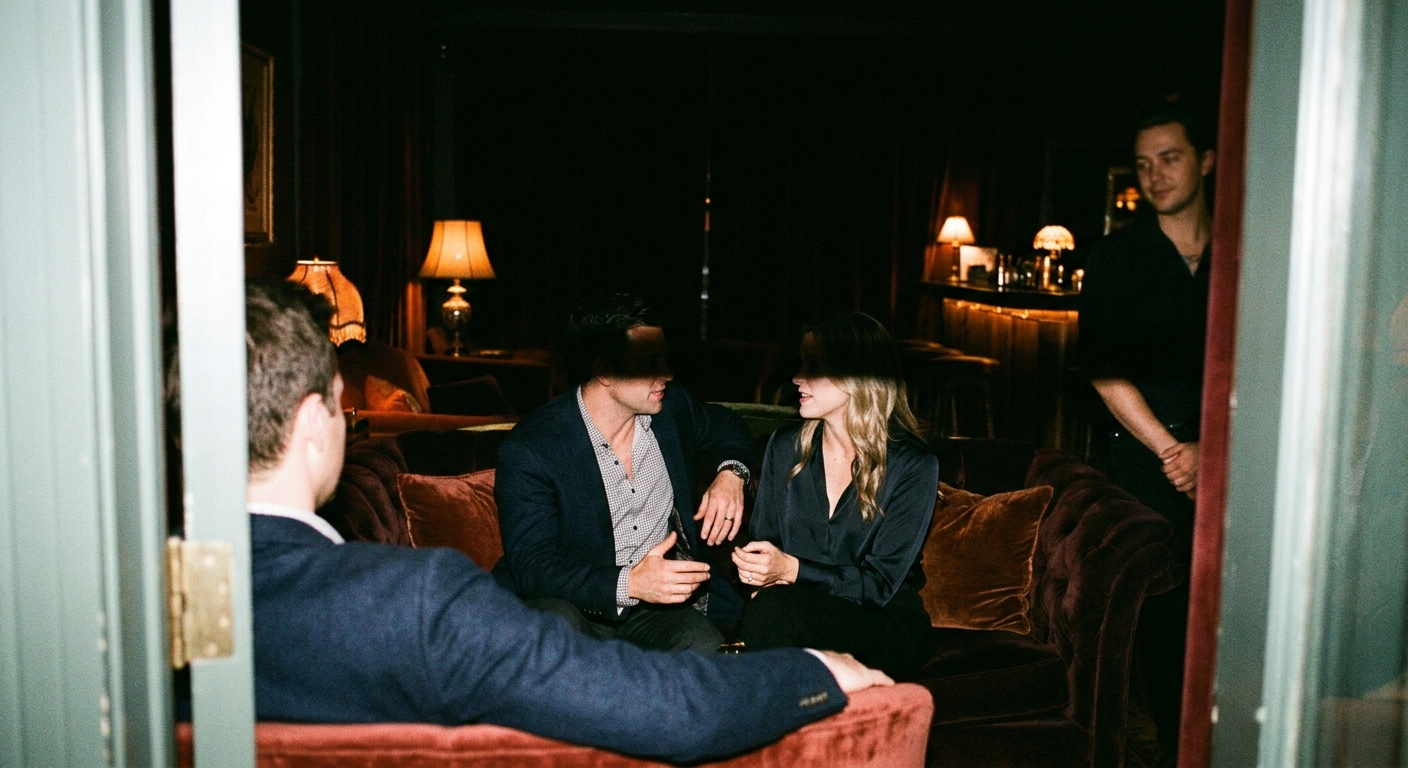
The host who actually understands this world does one thing consistently: they stay calmer than the room.
That is not about being unflappable. It is about shouldering the room's stability so guests do not have to borrow courage from each other. A good host at a private play party looks less like a bouncer and more like someone who has been in this room long enough to know which couples are arriving as themselves and which ones are already performing before they even said hello.
The difference between a hot room and a room people trust enough to return to is almost always the host's nervous system, not the guest list's attractiveness.
The best hosts have already done the invisible work
Guests do not see most of what makes a night feel easy. They do not see the host walking the floor in their own shoes before anyone arrives, checking that the hallway light does not blow out proximity, that the bathroom towels are actually folded, that the transition from the front door to the lounge does not expose anyone to strangers unexpectedly.
They do not see the host mentally mapping which couples arrived together, which ones seem already aligned, and which ones might need a discreet nudge toward the social end of the room before the pace gets away from them. That is not control. That is care. And it is what separates rooms that feel curated from rooms that just feel loud.
A good host greets couples, not individuals
The fastest tell in a room is how the door is handled.
A weak host greets the boldest person first. A strong host makes eye contact with both of you before either of you speaks. They learn names fast. They say where coats go, where phones go, and what rules matter before anyone drifts deeper into the room. They do not push drinks into hands and call it a vibe.
That initial moment sets the couples' baseline for the whole night. If they feel welcomed as a unit, they will behave like a unit. If they feel like they are being processed, they will either try to prove themselves or disappear into the crowd.
Play Party Front Door Check-In Sets the Tone covers the attendee side well. From the host side, the rule is dead simple: never let a couple walk in feeling like they have already been evaluated before they have said hello.
The host notices the quiet partner before anyone else does
This is the people skill that cannot be taught in a checklist.
Good hosts watch couple dynamics, not just individual confidence. They notice when one person is talking and the other is staring into their drink. They notice when one partner laughs slightly too hard at something that was not actually funny. They notice the hand that stops touching its partner the second another couple gets too close.
Experienced hosts do not call attention to these moments publicly. They intervene discreetly. Maybe they move the conversation to loud social space. Maybe they stand just close enough to change the geometry without making it obvious. Maybe they make eye contact with the quieter partner and offer a slow nod that says, I see you.
That last move prevents more bad nights than any speech. It tells the person who is drifting that they are not invisible and that they still have an ally in the room.
A host should intervene without making it a scene
When something needs to change, great hosts make the intervention feel like it was the room's idea, not theirs.
If someone is drinking too fast and getting sloppy, a good host does not cut them off in front of the group. They offer water. They suggest stepping out for air. They redirect the conversation toward something lighter. If a couple is moving into a private space faster than one of them seems ready, the host might drift closer and ask a casual question that gives the slower partner an opening to pause without saving face.
This is not manipulation. It is social architecture. Hosts who understand this are not trying to control people. They are trying to keep the room honest.
The host protects the pace, not just the rules
Rules tell people what not to do. Pace tells people how to feel while they are doing it.
A room with perfect rules and terrible pacing feels stiff. A room with loose rules and great pacing feels wild but navigable. Hosts who can manage tempo create the second kind without having to act like a referee the whole night.
The simplest tool a host has is tempo. Do not let alcohol outrun water. Do not let the social part of the night feel like dead time to rush through. Keep seating available. Keep conversation possible. Notice which couples are sparkling together and which ones are chasing intensity to compensate for something that is not there.
If you want to understand why some rooms feel clean even when they are sexually adventurous, this is a big reason. The host is managing chemistry, not just enforcing it.
The exit should feel as graceful as the arrival
How a host handles the end of the night reveals more than how they handled the middle.
Bad hosts ghost the room the minute things slow down. Good hosts stay visible until the last couple is out. They make leaving feel clean, not like abandonment. They make departing couples feel like they were part of something, not like they missed the thing.
The couples who leave feeling like they belong will come back. The couples who leave feeling like the host already checked out will remember exactly who left first.
The short version
If you want the host checklist, it is this:
- Arrive before the room does.
- Greet every couple as a unit.
- Notice the quiet partner first.
- Intervene without making it a scene.
- Protect the pace, not just the rules.
- Leave the exit as graceful as the arrival.
A good host is the calmest person in the room because they chose to be. They did the work early. They read the room constantly. They intervene with style. And they make couples feel like the night happened because the room was built for it, not because someone pushed everyone through it.
At Venus, that is the standard worth protecting because it is the only version of the lifestyle that stays both charged and worth returning to.